

Recent Blog Posts
Defending against bank robbery allegations
Bank robbery might sound like something out of the past, associated with stagecoaches and outlaws, but it remains a serious and relatively common criminal charge in modern times.
In Washington State, bank robbery is prosecuted aggressively under both state and federal law, often resulting in decades in prison if a conviction is secured by the prosecutors in any particular case. These cases are often punished severely because they involve financial institutions, potential threats to employees and customers and public safety concerns. As a result, anyone accused of bank robbery needs to understand the gravity of the charges they’re facing and how they may be able to mount a successful defense.
Modern bank robbery and modern responses to such charges
Unlike in old depictions of outlaws, today’s bank robberies often do not involve elaborate heists. Many are crimes of desperation, frequently connected to addiction or other personal struggles. Defendants may act impulsively rather than as part of an organized plan, sometimes even passing notes demanding money without weapons or direct violence. While these cases are still treated as felonies, the context related to a particular case can make a difference in how a defense is mounted and/or how prosecutors or judges view the circumstances at issue.
When are criminal offenses considered “white collar” crimes?
White collar crime is a term commonly used to describe a category of generally nonviolent criminal offenses that are primarily financial in nature. These offenses usually involve deceit, concealment and a breach of trust rather than direct force or threats. What most obviously distinguishes white collar crime from many other forms of criminal activity is the context in which it occurs and the motivation behind it.
A criminal offense is generally considered white collar when unlawful financial misconduct unfolds in professional, business or financial settings. Fraud is one of the most common examples, whether it takes the form of investment fraud, mortgage fraud, healthcare fraud or securities fraud.
Each of these concerns involves misrepresenting information for monetary benefit. Embezzlement also falls within this category, as it involves the misappropriation of funds entrusted to someone in a position of responsibility, such as an employee siphoning money from an employer. Similarly, insider trading is a white collar crime because it relies on abusing confidential business information to manipulate markets for profit.
Problems with violating a no-contact order?
When family matters mix with legal issues, things can get intense. Emotions often run high, especially when ex-spouses are involved and it is not unusual for disagreements to happen, particularly when discussing child visitation. Sometimes, in the heat of the moment, court orders like no-contact orders might be overlooked.
What happens if you violate a no-contact order?
A no-contact order is a legal instruction from the court. It tells you to stay away from a specific person. This usually means no physical contact, calls, emails or messages through others. Even if the other person tries to contact you, it is your responsibility to avoid communication. Violating one can lead to serious consequences. Even a brief exchange during a child visitation can result in arrest and additional charges. Penalties can include jail time, fines and a permanent criminal record. This can affect your job, your ability to rent a home and your rights as a parent.
What is the age of criminal responsibility in Washington?
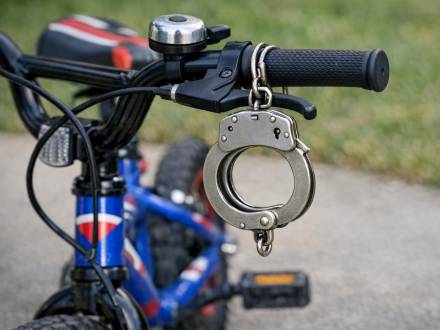 In Washington, the age of criminal responsibility defines the minimum age a person can face legal accountability for a crime. This age is important because it determines when the legal system can intervene and charge a young person for criminal behavior.
Washington’s age of criminal responsibility
In Washington, individuals must be at least 8 years old to face criminal responsibility. State law sets this threshold for prosecution. Children under 8 cannot face criminal charges in Washington. If a child under this age commits an offense, the law considers them incapable of criminal intent, so they cannot face criminal charges.
What happens when a child commits a crime?
When a child who is 8 or older commits a crime, they can face arrest and the juvenile justice system’s processing. The juvenile justice system operates differently than the adult criminal system. It focuses on rehabilitation rather than punishment. Juveniles face different penalties, such as detention in juvenile facilities, probation, or educational programs.
How does Washington classify controlled substances?
Drug charges can carry serious consequences, but not all substances are treated the same under Washington law. The state sorts drugs into categories based on how dangerous they are and how likely they are to be abused. Understanding these categories can help you see how the law views different substances and why penalties vary.
Controlled substance schedules
Washington divides controlled substances into five schedules. Schedule I drugs, like heroin or LSD, are considered the most dangerous. They have no accepted medical use and a high risk for abuse. Schedule II includes drugs like methamphetamine and cocaine—these have limited medical uses but still carry a high potential for addiction.
Schedules III through V include substances with decreasing levels of abuse risk and more accepted medical purposes. For example, Schedule III includes certain steroids, while Schedule V covers things like cough medicines with small amounts of codeine.
How online behavior can affect a no-contact order
 In Washington State, violating a no-contact order by contacting someone online can lead to serious legal consequences. Whether you’re sending an email, a text message, or posting on social media, any form of communication that breaches the terms of a no-contact order can put you at risk of facing criminal charges, including jail time. Understanding the implications of these orders and what qualifies as a violation is essential to avoiding severe penalties.
Understanding no-contact orders
A no-contact order is a legal directive issued by a court to prevent an individual from contacting or approaching another person. These orders are commonly associated with cases involving harassment, domestic violence, stalking, or sexual assault. They can be issued before or after a conviction and are enforceable statewide in Washington.
Online contact and its implications
Contacting someone online—whether through social media, email, or messaging apps—constitutes communication. If a no-contact order prohibits all forms of contact, initiating or responding to online messages violates the order. The law does not differentiate between physical and electronic contact; both are treated equally under state law.
How can false domestic violence allegations be challenged?
False domestic violence allegations can flip your life upside down. Even before your day in court, people may judge you based on nothing more than an accusation. But there are ways to fight back and protect your name.
Understanding the stakes
In Washington, domestic violence charges carry serious penalties. You could face jail time, lose your gun rights, and even have a no-contact order placed against you. Under RCW 10.99.020, domestic violence includes harm or threats between family or household members. But not every accusation is true. Sometimes, people make claims out of anger, revenge, or to gain the upper hand in custody disputes.
Gathering strong evidence
Your defense starts with collecting evidence. Look for text messages, social media posts, voicemails, or witness statements that show the accusation is false or that your accuser had a motive to lie. If the incident happened in a public place, surveillance footage can help. Medical records may also prove there were no injuries when the accuser claimed otherwise.
When is entrapment a defense in a criminal case?
Entrapment occurs when law enforcement persuades someone to commit a crime they would not have committed otherwise. This defense can apply when officers use coercion, pressure, or deception beyond offering an opportunity to break the law.
In Washington, entrapment is a legal defense, but it requires proof that the idea and encouragement to commit the crime came from law enforcement, not the defendant.
Understanding entrapment under Washington law
Washington law defines entrapment under RCW 9A.16.070. To use this defense, you must show that law enforcement induced the crime and that you were not predisposed to commit it. Simply being given the chance to commit a crime does not qualify. The key factor is whether the officers’ actions were likely to convince a normally law-abiding person to engage in illegal activity.
What role do deepfakes play in modern identity theft?
 Deepfake technology uses artificial intelligence to make realistic-looking videos, audio clips, and pictures. It can make it seem like someone did or said something they did not do. While deepfakes can be helpful in entertainment and education, they also cause problems when people are falsely accused because of fake content.
Deepfakes as tools for criminal framing
Criminals use deepfakes not just to steal identities but also to blame others for crimes. A deepfake video or audio clip can show an innocent person at a crime scene or make it seem like they admitted to illegal acts. These fakes can ruin lives, leading to wrongful arrests, hurt reputations, and long legal fights.
Impacts on criminal defense cases
When someone is accused using deepfake evidence, proving they are innocent can be very hard. Deepfake content looks so real that it’s tough to convince investigators or juries that it’s fake. People accused in these cases need professionals to prove the deepfake is not real.
Vehicular homicide vs. negligent driving: What’s the difference?
Vehicular homicide and negligent driving are both serious traffic offenses. However, they carry different legal consequences.
Understanding what each charge includes can help you know what to expect.
Vehicular homicide
Vehicular homicide typically involves a more serious level of accountability than negligent driving. In Washington state, vehicular homicide often involves:
- Reckless driving: Operating a vehicle with a willful or wanton disregard for the safety of others.
- Intoxication: Driving under the influence of drugs or alcohol.
- Speeding: Driving at an excessive or unreasonable speed.
- Distracted driving: Engaging in activities that divert attention from the road, such as texting or using a cell phone.
Vehicular homicide charges can carry significant penalties. These may include imprisonment, fines, and the suspension or revocation of driving privileges. Having a prior offense can increase the penalty.


1105 Tacoma Ave South, Suite A, Tacoma, WA 98402
253-442-7544
From our office in Tacoma, WA, we represent clients in Auburn, Bonney Lake, Centralia, Chehalis, Des Moines, DuPont, Edgewood, Federal Way, Fircrest, Fife, Gig Harbor, Kent, Lakewood, Milton, Normandy Park, Olympia, Orting, Pacific, Parkland, Puyallup, SeaTac, Seattle, Spanaway, Steilacoom, Sumner, University Place, and other towns and cities throughout King County, Lewis County, Pierce County, and Thurston County.
Results listed are not a guarantee or indication of future case results.